

Additional Authors:
Megan Rosa, Laura Nicaise, Sasha Izeman
Executive Summary
Community-scale clean energy and energy efficiency projects can play an important role in improving affordability for individuals and households. Expanding clean energy access through projects such as community solar and EV charging infrastructure, and implementing building energy efficiency measures, such as heat pumps and envelope improvements, can help reduce utility costs, improve energy reliability, and lessen harmful emissions. Rising energy prices increase the burden on consumers, furthering the need for energy-saving measures and for lenders to help finance these projects. Community lenders, including green banks such as NYCEEC, can help fill gaps in the market to make capital available to pursue these types of projects.
NYCEEC finances a wide range of community-scale projects. Table 1 below identifies typical project types financed by NYCEEC, and ways that each type may improve affordability for individuals and households.
Project Types and Potential Affordability Benefits:
Project Type | Potential Affordability Benefits of NYCEEC Financing |
|---|---|
Predevelopment Lending for Affordable Housing Retrofits | Finances engineering work to identify building energy or water savings to reduce tenant costs and/or necessary public subsidies for affordable housing |
Predevelopment Lending for Construction of New Affordable Housing | Finances engineering and design work for high-performance buildings (e.g., net zero, Passive House) with lower operating costs, allowing public subsidies that would otherwise be needed for buildings to support additional affordable housing |
Term Lending and Equipment Lending for Co-Op/ Condo/ Rental Retrofits | Finances work (e.g., solar PV system; replacement of inefficient heating and cooling systems) that lowers building operating costs (incl. local government penalties for excess emissions, if applicable) which reduce tenant monthly charges |
Predevelopment, Term or Equipment Lending for Institutions (e.g., Schools, Houses of Worship) | Finances work that lowers building operating costs which allows institutions to deliver services more cost-effectively to individuals and households |
Loans for Rooftop Solar PV Systems (serving only the host building) | Finances solar projects that lower building operating costs which reduce ongoing tenant costs |
Loans for Community Solar (serving multiple subscribers) | Finances larger solar projects that increase energy supply in a region and can offer reduced electricity rates for subscribers |
Loans for EV Charging Infrastructure | Finances equipment to improve the access and affordability of EV charging, especially for commercial drivers (e.g., Uber, Lyft) |
In each case, the benefits of these projects—including affordability—should be weighed against the cost of undertaking these projects, including financing. Thus, the critical role of community lenders in financing these projects efficiently.
This report highlights the importance of affordability, summarizes NYCEEC project lending activities, discusses the benefits of these projects, and finally, profiles three projects and their benefits. We hope this report stimulates further discussion on how to maximize the affordability benefits while also ensuring that these projects deliver economic, social, and environmental benefits that are critically important to the long-term sustainability of communities.
Spotlight on Affordability
Affordability has become a critical issue facing many individuals living in the US today and is a key consideration for policy decisions at all levels of government. Affordability is a pressing issue in most, if not all, sectors including housing, transportation, and energy. In the 10-year period prior to the Covid-19 outbreak (March 2010 to March 2020), inflation was relatively modest with annual changes in the Consumer Price Index (CPI)[1], measured monthly, averaging 1.7%. Since then, inflation has increased disproportionately, affecting many individuals (especially those whose income has not benefitted from wage inflation). From March 2020 to March 2026, the annual changes in CPI, measured monthly, averaged 4.2%.
These broad inflationary impacts have shown up in many household expenses including energy bills. From March 2021 to March 2026, the national average electricity bill has gone up by over 32%.[2] Supporting the deployment of community-scale clean energy and energy efficiency projects is one way to mitigate the effects of rising energy prices and improve affordability.
NYCEEC Project Lending
The New York City Energy Efficiency Corporation (NYCEEC) is a nonprofit lender to community-scale clean energy and energy efficiency projects. Most of NYCEEC’s loans help finance projects in New York City, but NYCEEC has financed projects elsewhere in New York State and select other states. Projects financed by NYCEEC include energy-efficiency and electrification retrofits of existing buildings, the construction of new energy-efficient buildings, rooftop solar photovoltaic (PV) systems, ground mount solar PV systems, battery storage, geothermal systems, electric vehicle (EV) charging infrastructure, and other related measures. While some of the projects that NYCEEC has helped finance have not resulted in significant energy savings, they delivered other benefits such as increased reliability, reduced maintenance, greater safety, improved operations, or longer useful life.
Measuring Savings from Community-Scale Clean Energy and Energy Efficiency Projects
The economic benefits of a clean energy or energy efficiency project (e.g., energy savings, reduced operating expenses) should consider the costs associated with financing and operating the project. While financing costs are normally easy to quantify, energy savings and operating expenses can be difficult to measure for several reasons:
- Establishing the baseline: e.g., calculating what energy costs would have been had a clean energy or energy efficiency project not been undertaken.
- Accounting for different energy usage: e.g., determining the impact of changes in building occupancy levels or in extreme weather conditions over a period.
- Comparing different technologies: e.g., comparing the energy costs of an electric vehicle to a gasoline-powered vehicle when each form of transportation differs in important ways (e.g., vehicle performance, operating costs).
- Allocating savings: e.g., in affordable housing, tenant costs may be regulated and residents may see no direct savings associated with building clean energy and energy efficiency projects, although building owners undertaking these projects may require reduced public subsidies which allow those unnecessary subsidies to support other affordable housing projects.
There are typically other types of economic benefits associated with undertaking these types of projects including lower operations and maintenance costs, reduced taxes or penalties, and increased asset values. There are also societal benefits associated with these projects including job creation and lessened environmental impacts, although these are also difficult to translate into an impact on affordability.
NYCEEC tries to evaluate the financial impact of the projects that it helps finance, recognizing that projects typically require an individualized approach to determining benefits. To help illustrate how these benefits may support affordability, NYCEEC reviewed selected projects that it has financed.
Settlement Housing Fund – Financing Newly-Constructed Energy-Efficient Affordable Housing
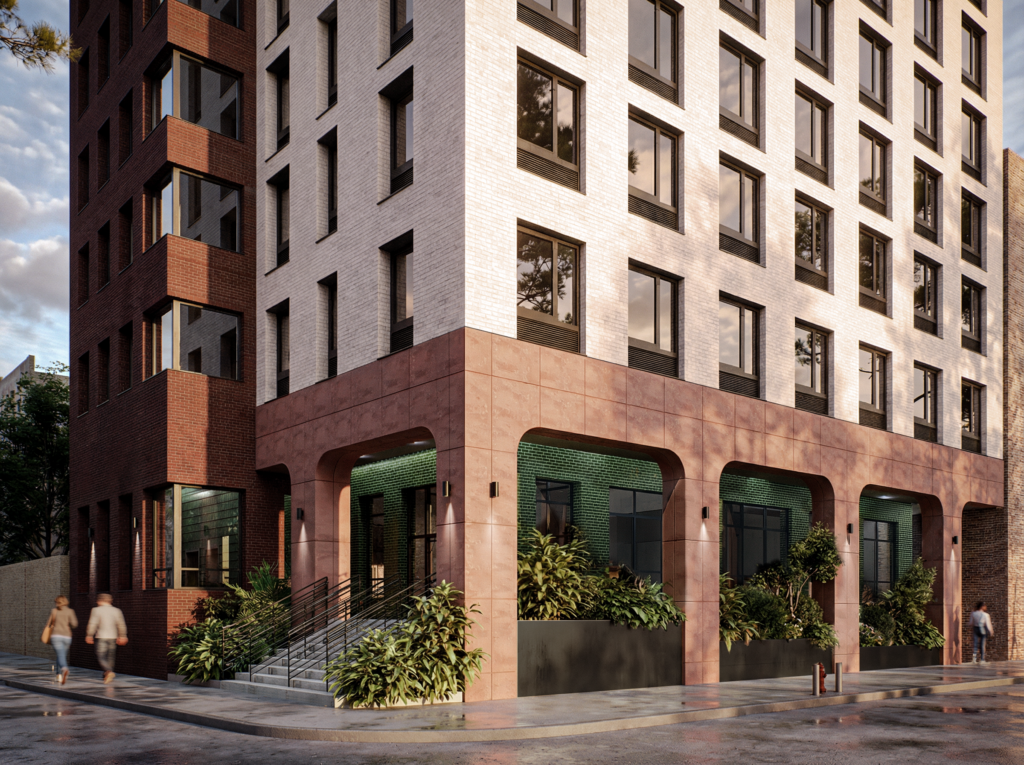
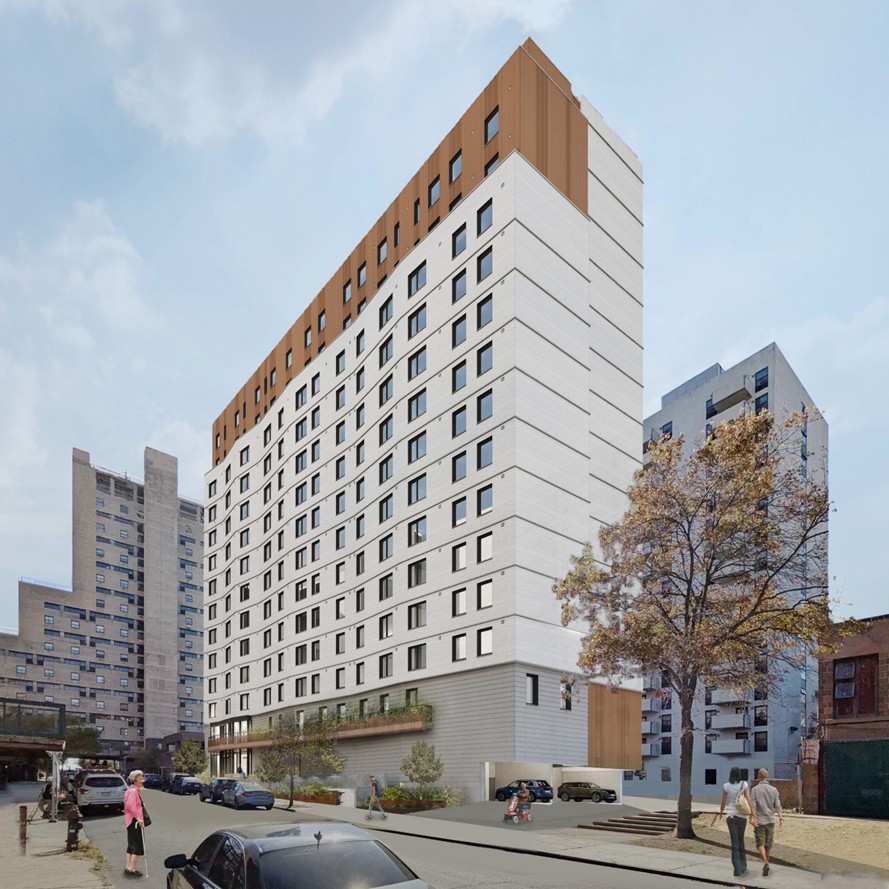
Photo renderings by Settlement Housing Fund; project in Manhattan (Left) and in Brooklyn (Right)
Settlement Housing Fund creates, preserves, and sustains high-quality affordable housing that revitalizes neighborhoods and enables residents to thrive. NYCEEC has financed predevelopment work to support the construction of new affordable housing with social services by SHF, including a 120-unit building in Manhattan and a 179-unit building in Coney Island, Brooklyn. Both developments will be 100% affordable, servicing households earning between 30% and 80% of the Area Median Income (AMI). Both projects are expected to meet Passive House standards, which significantly benefit tenant comfort, health, and safety, and reduce the building’s utility costs through superior insulation, energy efficiency, daylighting, and ventilation.
In these projects, tenants will not pay heating costs. It is difficult to calculate individual tenant energy savings when the project is new construction, however, operating cost savings associated with Passive House projects support affordability for New Yorkers. Reduced operating costs will increase the net operating income (NOI) of the building. This increased NOI allows the building to support additional debt, which reduces the amount of government subsidy necessary to fund construction of the building.
New York City’s capital subsidies are in high demand and are the main obstacle to increasing the supply of affordable housing. By reducing the amount of capital subsidy required for these energy-efficient buildings, there are more subsidy dollars available to allocate to additional affordable housing projects, thus increasing the supply of affordable housing in New York City.
Oneida Collins – Financing a Ground-Mounted Community Solar Project
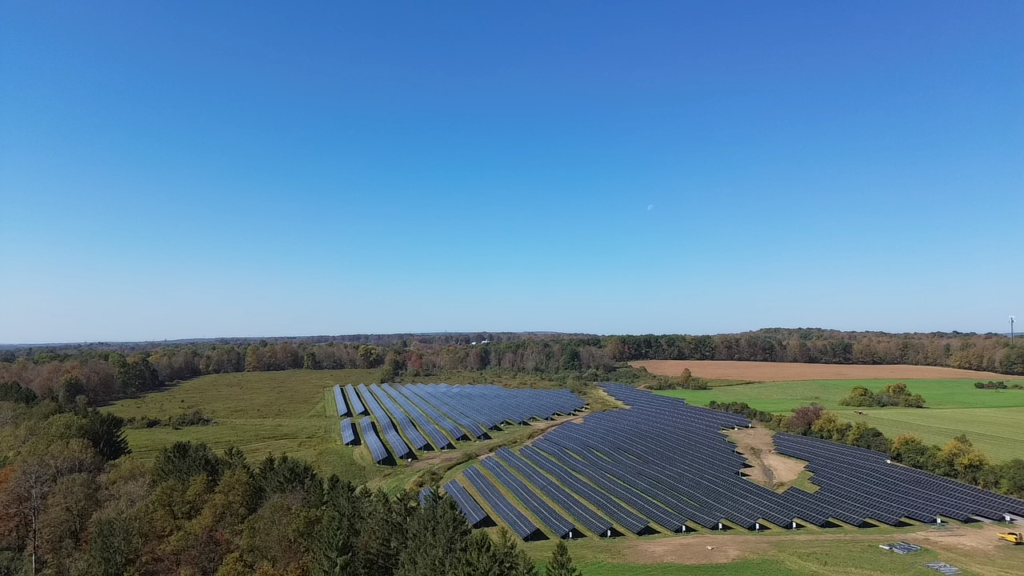
Photo by Sunlight General
In July 2024, NYCEEC provided an $8 million bridge loan that converted to a $5.8 million permanent loan to finance two ground-mounted solar PV installations at two sites in upstate New York. 100% of the energy generated by both projects is subscribed to low- to moderate-income (LMI) residents in the National Grid service territory.
Both solar PV installations are participating in New York’s “Expanded Solar For All” (E-SFA) Program by contributing a substantial portion (20%) of their electricity sale revenues for distribution to LMI utility customers in the region. These funds are pooled with contributed funds from other E-SFA projects, and the pool of funds is distributed equally to qualifying LMI utility customers as credits to their electric bills.
- The Collins project is expected to contribute an average of $192,300 per year for 25 years to the LMI pool, for a total expected contribution of $4.8 million over its life.
- The Oneida project is expected to contribute an average of $204,072 per year for 25 years to the LMI pool, for a total expected contribution of $5.1 million over its life.
As other E-SFA projects are built, the pool of benefits increases. NYSERDA, New York’s state energy agency, estimates that customers participating in the program should save $180 annually with minimum expected savings of $40 per year. The benefits pool changes as more community solar projects are built—and the number of LMI utility customers participating in the program varies. Nevertheless, the expected aggregate benefits of $9.9 million for these two installations are significant, especially given the total project cost of $20.8 million, and should provide greater energy affordability for participating LMI customers. This estimate excludes other potential costs and benefits, for example, generating additional electricity to meet rising energy demands.
Sustainable Westchester – Financing Battery Storage, Rooftop Community Solar, and EV Charging Infrastructure
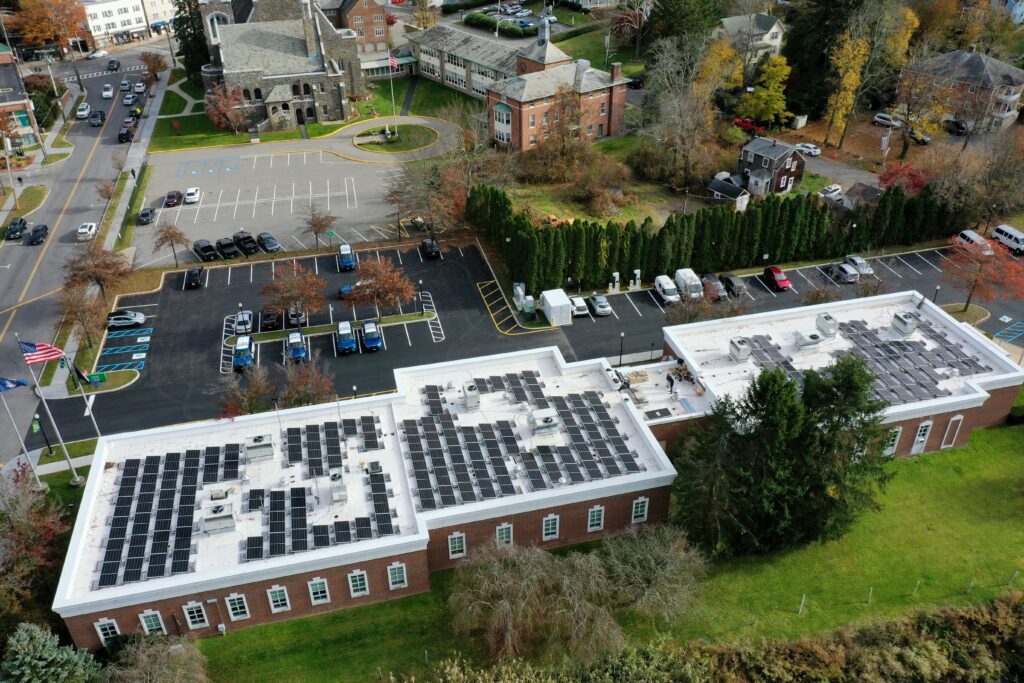
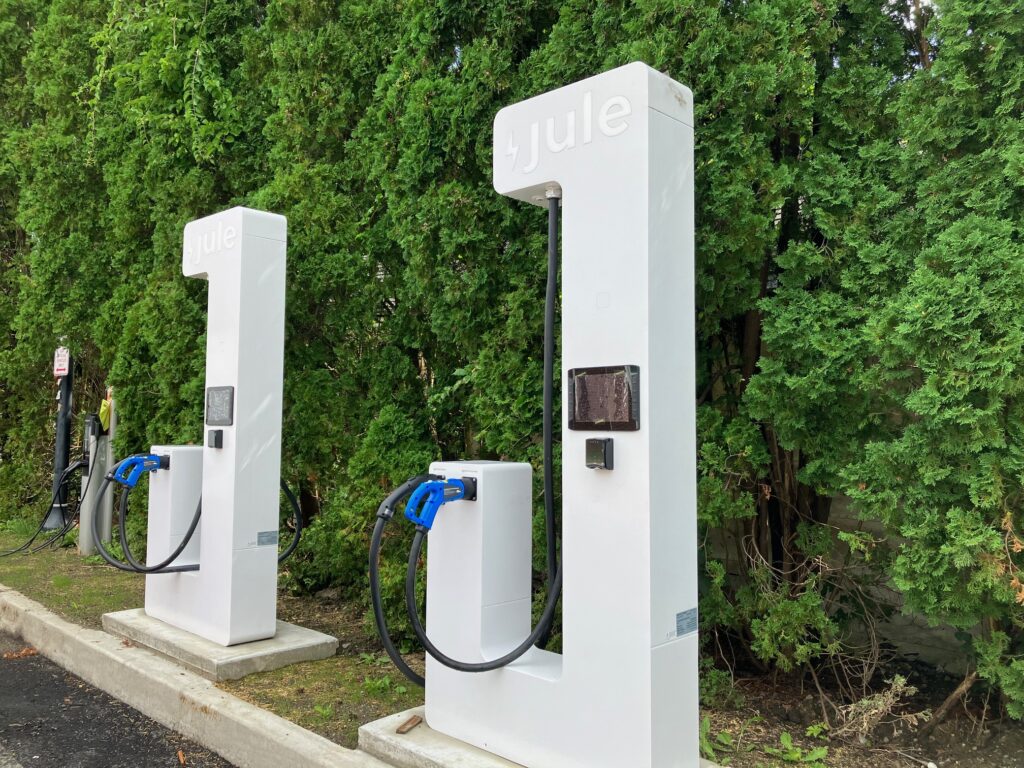
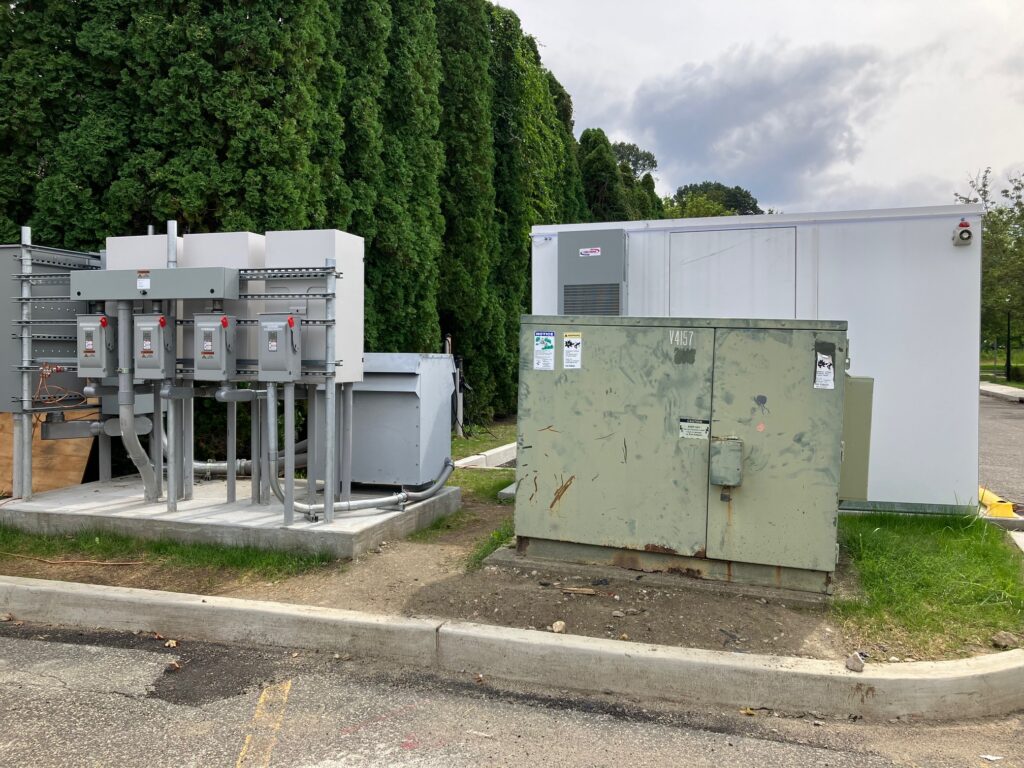
Photos by Sustainable Westchester
In June 2023, NYCEEC provided a $300,000 loan to support the installation of a 95 kW rooftop solar system, a 180kW lithium-ion battery, and two DC Level 3 EV fast chargers at a municipal building in Westchester County, NY. Under a community solar subscription structure, most of the solar generation benefits low- to moderate-income (LMI) households in the surrounding area, while the remaining generation powers the battery storage system and publicly available EV charging. Based on current data from Sustainable Westchester, a municipal membership group of several Westchester cities/towns/villages and sponsor of the project:
- The average annual solar energy production from the system is over 85,000 kWh
- The 30 LMI households that have subscribed have saved up to 10% on their utility bills, based on the standard Con Edison tariff rate, which equates to about $1,125 in annual savings.
- While EVs offers certain pros and cons versus gasoline-powered vehicles, the national average cost for EV charging equates to $0.12 cents per mile versus $0.17 cents per mile for a traditional gasoline-powered vehicle. This represents a 32% reduction in fuel costs, or over $740 annually for a vehicle driven the national average of 13,500 miles. [3]
While the community solar discount can fluctuate based on the amount of energy generated by the panels, subscribers are able to receive monthly savings on their electric bills without installing solar panels on their own homes. Additionally, the combined solar and storage system provides reliable and affordable EV charging. This project is an example of how combining solar energy generation, battery storage, and electric vehicle charging can not only reduce emissions, but can also reduce the impact of volatile fossil‑fuel prices and keep energy savings within the community.
Looking Ahead
Community-scale clean energy and energy efficiency projects provide individuals and households with potential options to address affordability while also supporting environmental sustainability and energy reliability. NYCEEC’s financing products support affordability across a wide range of project types. These investments may help reduce energy costs, expand access to clean energy, and deliver long-term financial benefits to communities.
As the cost-of-living rises, expanding clean energy and improving energy efficiency is critical, especially for low-and-moderate income communities. These projects help protect households and individuals from volatile energy prices, savings that can be reinvested locally to reach more members of the community.
Contributors
The authors wish to thank Judy Herbstman (Settlement Housing Fund), Stacey Hughes (Sunlight General), and Jan Brennan (Sustainable Westchester) for their valuable input and contributions to this report.
[1] For purposes of this discussion, the Consumer Price Index for All Urban Customers; All Items in U.S. City Average is being used to measure inflation. https://fred.stlouisfed.org/series/CPIAUCSL#
[2] Heat Map News x MIT Electricity Price Hub. https://electricity.heatmap.news/?li_fat_id=dfca5668-0b3e-4a74-abcd-83e813db6628.
[3] National Gas Prices and EV Charging Prices as of May 27, 2026: https://gasprices.aaa.com/
Projected energy savings based on source savings. All information is from sources deemed reliable. No representation is made and we do not guarantee the accuracy of any information provided. No assurances can be given that the future results indicated, whether expressed or implied, will be achieved.